One of the things I struggle with, in classes taught in computer labs, is the distraction factor. My Journalism 2 course is structured so that students work independently and function for much of the course as freelance writers. Now I know in the real world, freelance writers work from home much of the time. They might multitask among any number of activities including reporting, writing, reading, checking e-mail, eating, and talking on their cell phones. Unfortunately, in a classroom setting that is governed by school rules much of this is impossible. In addition, watching students get done “just what they need to do” for the day to spend much of the 82 minute block playing games, commenting on Facebook, or playing videos on YouTube drives me crazy.
So the question I’d like to pose is how do you set up an environment that functions as a writers' workshop where students are productive without being distracting or breaking school rules?
Thursday, May 24, 2007


Wednesday, November 29, 2006
Only with a weblog
One of the things I love about using weblogs with my students is the flexibility it can build into the curriculum.
Case in point: In the last couple of years, the Philadelphia Inquirer has been having financial difficulties like many other big city dailies (To read more about the Inky’s most recent problems click here). Ten months ago Amanda Bennett, the editor-in-chief of the paper, wrote about plans she had to serve readers better given the prevalence of 24-hour news. Since then I’ve had each new section of journalism students read this article and respond to it.
On Sunday morning, I was reading the paper and read Ms. Bennett’s last column as editor of the paper. She is being forced out by the new owners, but her column is a positive piece about how journalism and newspapers will survive changes in society, technology, and economics. I went to the Inquirer’s online site, and created a link to the article in a post on my class weblog. By 9:30 the next morning my students were reading and responding to the column through the discuss feature of the blog. Their comments were honest and well thought out.
After class was over, I e-mailed Ms. Bennett and told her about our weblog and by 11:45 AM she had read my students comments and responded to them.
The next day when I told my students that Ms. Bennett had responded they actually seemed impressed (at least some of them), and they quickly logged on to see what she had to say.
Case in point: In the last couple of years, the Philadelphia Inquirer has been having financial difficulties like many other big city dailies (To read more about the Inky’s most recent problems click here). Ten months ago Amanda Bennett, the editor-in-chief of the paper, wrote about plans she had to serve readers better given the prevalence of 24-hour news. Since then I’ve had each new section of journalism students read this article and respond to it.
On Sunday morning, I was reading the paper and read Ms. Bennett’s last column as editor of the paper. She is being forced out by the new owners, but her column is a positive piece about how journalism and newspapers will survive changes in society, technology, and economics. I went to the Inquirer’s online site, and created a link to the article in a post on my class weblog. By 9:30 the next morning my students were reading and responding to the column through the discuss feature of the blog. Their comments were honest and well thought out.
After class was over, I e-mailed Ms. Bennett and told her about our weblog and by 11:45 AM she had read my students comments and responded to them.
The next day when I told my students that Ms. Bennett had responded they actually seemed impressed (at least some of them), and they quickly logged on to see what she had to say.
Monday, March 13, 2006
Reflections on Disapointments and Near Misses - Part 1
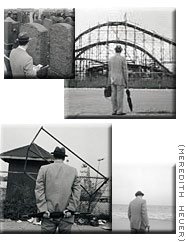
In the past few months many of the projects and goals that I have excitedly written about have taken some unexpected turns or have become the victims of scheduling or student apathy. In many cases I’ve assumed an interest in collaboration, interacting with professionals, doing real research, and connecting history to one’s own life that either wasn’t there or wasn’t present in enough abundance to motivate students to do something they weren’t required to do. What follows are a few of these tragic tales. Please be forewarned, if you are looking for a happy story of students transformed and entranced by technology you would be much better served by perusing the ramblings of almost any other Edublogger (my apologies to Lemony Snicket).
Probably the one project I spent the most time preparing for and which I thought would most benefit my 10th grade American Studies students now seems dead (or at least on life support). I have written about this project several times (click here, here, and here for a quick review). It involved researching something important and personal to them or their families or analyzing an aspect of where they live. As a class we got as far as choosing topics and doing some preliminary internet research. We even had the social studies supervisor come in and teach a class on conducting oral history since this was a component of the project. But unfortunately, I could never convey my excitement for the project to the kids. Where I saw an opportunity to do real research that actually connected to their lives, they saw more work with no easy answers. When the time came for them to do their formal research paper (which is required by the social studies department), all but one student chose a topic off a list rather than the personal topic they had chosen. This effectively delayed everything for weeks, and now with nine weeks of school left, reviving this project (while completing the curriculum) seems futile.
Monday, February 13, 2006
I'm Back.....
It’s been quite a while since I last posted. I’ve found myself trying to do too much and as a result not producing anything (blogwise) at all. I’ve been immersed in all that goes on in the classroom and advising a student newspaper, and have found myself falling behind on reading my Bloglines subscriptions. Now that a new semester has started, I feel it’s time to refocus my attentions with this blog.
First and foremost, this means that my posts will primarily be reflections on what is going on in my classroom, within my school, and with my kids producing our student newspaper. I’ve cut down my Bloglines subscriptions (for now) to reflect this as well. Anything that doesn’t directly relate to the subjects I’m teaching (journalism and American Studies) will have to wait until the summer. I’m hoping this will translate into regular posts once again. I think the reflections are important and the discussions and connections invaluable.
And now that I’ve found a new focus, I’ve got to come up with a new name especially since The Open Classroom was apparently already taken when I chose it. Any ideas?
First and foremost, this means that my posts will primarily be reflections on what is going on in my classroom, within my school, and with my kids producing our student newspaper. I’ve cut down my Bloglines subscriptions (for now) to reflect this as well. Anything that doesn’t directly relate to the subjects I’m teaching (journalism and American Studies) will have to wait until the summer. I’m hoping this will translate into regular posts once again. I think the reflections are important and the discussions and connections invaluable.
And now that I’ve found a new focus, I’ve got to come up with a new name especially since The Open Classroom was apparently already taken when I chose it. Any ideas?
Tuesday, December 27, 2005
Feedback from the Researchers
Right before the holiday break I collected research papers from my 11th and 12th grade students. I’ve blogged about the process we used in earlier posts here, here, and here. As our students munched on doughnuts on the last day of class, I asked them to respond to the research process. Here are some of their comments:
On Using RSS Feeds and Furl to keep up with News Articles:
“I felt like the furl was a critical tool for my research paper. Normally, if I were to try to save a link from one of the electronic resources provided by the school, it would not work when I would try to visit it at a later date. When that happens I have to start all over again, which is very frustrating. Furl not only saved my link and kept it working; it also gave the option for me to rate my source and leave a mental note about it.”
“If I was taking notes on books then it would be hard for me to go back to the book and find more information. With the links I could go right back to the article and get all the information I could out of my sources.”
“Let it be known that I despise research papers in every way, shape, and form, so my opinion is fairly slanted. However, compared to other research papers, this one wasn't so bad. I liked using Furl and Bloglines to collect and catalogue the information; it was much better than reading through tons of really boring books.”
“I thought that researching through bloglines and furl was a new but better and easier way to research. I especially liked using furl because it was better to save the information and have access to it later without having to look for it again. I thought that the whole process of learning how to do this was kind of fun in its own way. This method was very easy to learn and use you should definitely continue to use this.”
“I think Furl and Bloglines were both very useful to me. It was easy to find new information with Bloglines then save it to the list with Furl.”
“Finding information on bloglines and furl was amazing. It made it so much easier to do it that way. With bloglines you could just type something in and it would find articles for you. Furl was great too, all you did was "furl it" by clicking the furl button, and it saved the web address, and let you label it, it was so much more organized and easier to do than any another method.”
On Using Blog Posts Rather Than Note Cards:
“I used blog posts instead of note cards, as much as I didn't like doing this in the end it was worth it because it helped me organize my outline which helped me organize my paper.”
“I really liked the blog posts. It was a good way to get your ideas together and it forced you to write instead of just putting down quotes. For my final draft I pretty much used all my blog posts and revised my paper and wrote an intro and conclusion. It took me no more than an hour. It made writing the paper really easy because all the work was broken up in the course of a week.”
“At first, I really wasn't sure how we were supposed to write the blogs, so that was a bit frustrating, but other than that, it wasn't too bad. It also helped later on because I was able to just copy and paste a few sections from the blogs directly into the paper.”
“The blog posts were very easy to use once you were ready to actually write the paper. Since they were categorized into five categories that covered what the paper should contain all you really had to do was transfer the information from the blog posts and put it in the paper.”
“Blog posting was excellent. I practically had my whole paper written by the 5th post. It was a lot more effective for me to do this kind of note taking rather than write on notecards, which I have always hated to do. Plus, blogging made it easier to express my opinion and write out exactly what I wanted to say than write a summary of the article I was reading.”
“I had never done something like a blog post before as a form of research. I thought it worked well. It was better than taking notes on note cards that seemed kind of pointless and boring to me.”
“I found the blog post to be easier and more convenient, with blog post you don’t have to worry about losing it because its posted and its always there if you need to reference to it or change it. You can access it form home and you don’t have to wait for a teacher to give it back to you.”
On Getting Feedback During the Drafting Process through the Weblog:
“The feedback was very useful, it is better when feedback is given during the writing process rather than after. By being given feedback during the writing process I was able to fix the paper as I went along, rather then go back to it after I was finished.”
“The only thing I would change is to not schedule it during the last week before break. This was possible the worst week ever in terms of free time.”
“I didn’t receive much feedback through the weblog at all, so I prefer to make a rough draft and have feedback written all over my paper instead. There is usually more feedback on a rough draft than the weblog and more feedback helps me write a better research paper.”
“I think that the feedback through the weblogs was much more effective than the other method of handing in rough drafts. I am glad that we used this instead that way you don't have to look at more papers.”
“I like being able to post then get the feedback online. It's easier to read for one, and it’s usually instant so we know how to improve it/what to change right away.”
“I like using the weblogs and posting. Feedback is crucial for me to complete a paper properly. By gradually getting feedback my papers can be even better. I can make changes easily and get feedback quickly too. Having the weblog was definitely the most helpful tool for writing the research paper.”
“The feedback was good, especially on the blog post; I could access it anytime and see what people or teachers had to say. I got some good advice as to what I should do to make my paper better.”
And General Advice:
“I enjoyed the paper but thought that it may have been more useful if we concentrated a little more on the first blog about the topic. Students should be aware that the blog should be taken seriously because if they find that they are not passionate about a topic early on, they will be able to change it which will make the process a lot easier. “
Summary and Reflection: Generally, students seem to find using Furl and the RSS Box on their individual weblogs to be an extremely useful tool. The use of a news aggregator (we used Bloglines) seemed to be more of a mixed bag. I think it was more useful for students who had topics that were very current and generating news updates almost daily (for instance this one and this one). Not all of the students chose to use blog posts as a form of note taking, but those that did were very pleased with the results. Next time, I’ll spend a little more time having everyone practice doing blog posts by getting them familiar with reading them, writing them, and using the rubric.
A couple of students weren’t happy with getting feedback via the weblog as opposed to a full printed rough draft, but overall students seemed to find this method more useful and I certainly found that I had a better handle on what they were writing about and that I could more easily address problems as they occurred.
Finally, I learned that outlines for research papers are a waste of time for both me and the students and I will no longer require them. By giving them feedback as they write, I can identify organizational problems as they occur.
On Using RSS Feeds and Furl to keep up with News Articles:
“I felt like the furl was a critical tool for my research paper. Normally, if I were to try to save a link from one of the electronic resources provided by the school, it would not work when I would try to visit it at a later date. When that happens I have to start all over again, which is very frustrating. Furl not only saved my link and kept it working; it also gave the option for me to rate my source and leave a mental note about it.”
“If I was taking notes on books then it would be hard for me to go back to the book and find more information. With the links I could go right back to the article and get all the information I could out of my sources.”
“Let it be known that I despise research papers in every way, shape, and form, so my opinion is fairly slanted. However, compared to other research papers, this one wasn't so bad. I liked using Furl and Bloglines to collect and catalogue the information; it was much better than reading through tons of really boring books.”
“I thought that researching through bloglines and furl was a new but better and easier way to research. I especially liked using furl because it was better to save the information and have access to it later without having to look for it again. I thought that the whole process of learning how to do this was kind of fun in its own way. This method was very easy to learn and use you should definitely continue to use this.”
“I think Furl and Bloglines were both very useful to me. It was easy to find new information with Bloglines then save it to the list with Furl.”
“Finding information on bloglines and furl was amazing. It made it so much easier to do it that way. With bloglines you could just type something in and it would find articles for you. Furl was great too, all you did was "furl it" by clicking the furl button, and it saved the web address, and let you label it, it was so much more organized and easier to do than any another method.”
On Using Blog Posts Rather Than Note Cards:
“I used blog posts instead of note cards, as much as I didn't like doing this in the end it was worth it because it helped me organize my outline which helped me organize my paper.”
“I really liked the blog posts. It was a good way to get your ideas together and it forced you to write instead of just putting down quotes. For my final draft I pretty much used all my blog posts and revised my paper and wrote an intro and conclusion. It took me no more than an hour. It made writing the paper really easy because all the work was broken up in the course of a week.”
“At first, I really wasn't sure how we were supposed to write the blogs, so that was a bit frustrating, but other than that, it wasn't too bad. It also helped later on because I was able to just copy and paste a few sections from the blogs directly into the paper.”
“The blog posts were very easy to use once you were ready to actually write the paper. Since they were categorized into five categories that covered what the paper should contain all you really had to do was transfer the information from the blog posts and put it in the paper.”
“Blog posting was excellent. I practically had my whole paper written by the 5th post. It was a lot more effective for me to do this kind of note taking rather than write on notecards, which I have always hated to do. Plus, blogging made it easier to express my opinion and write out exactly what I wanted to say than write a summary of the article I was reading.”
“I had never done something like a blog post before as a form of research. I thought it worked well. It was better than taking notes on note cards that seemed kind of pointless and boring to me.”
“I found the blog post to be easier and more convenient, with blog post you don’t have to worry about losing it because its posted and its always there if you need to reference to it or change it. You can access it form home and you don’t have to wait for a teacher to give it back to you.”
On Getting Feedback During the Drafting Process through the Weblog:
“The feedback was very useful, it is better when feedback is given during the writing process rather than after. By being given feedback during the writing process I was able to fix the paper as I went along, rather then go back to it after I was finished.”
“The only thing I would change is to not schedule it during the last week before break. This was possible the worst week ever in terms of free time.”
“I didn’t receive much feedback through the weblog at all, so I prefer to make a rough draft and have feedback written all over my paper instead. There is usually more feedback on a rough draft than the weblog and more feedback helps me write a better research paper.”
“I think that the feedback through the weblogs was much more effective than the other method of handing in rough drafts. I am glad that we used this instead that way you don't have to look at more papers.”
“I like being able to post then get the feedback online. It's easier to read for one, and it’s usually instant so we know how to improve it/what to change right away.”
“I like using the weblogs and posting. Feedback is crucial for me to complete a paper properly. By gradually getting feedback my papers can be even better. I can make changes easily and get feedback quickly too. Having the weblog was definitely the most helpful tool for writing the research paper.”
“The feedback was good, especially on the blog post; I could access it anytime and see what people or teachers had to say. I got some good advice as to what I should do to make my paper better.”
And General Advice:
“I enjoyed the paper but thought that it may have been more useful if we concentrated a little more on the first blog about the topic. Students should be aware that the blog should be taken seriously because if they find that they are not passionate about a topic early on, they will be able to change it which will make the process a lot easier. “
Summary and Reflection: Generally, students seem to find using Furl and the RSS Box on their individual weblogs to be an extremely useful tool. The use of a news aggregator (we used Bloglines) seemed to be more of a mixed bag. I think it was more useful for students who had topics that were very current and generating news updates almost daily (for instance this one and this one). Not all of the students chose to use blog posts as a form of note taking, but those that did were very pleased with the results. Next time, I’ll spend a little more time having everyone practice doing blog posts by getting them familiar with reading them, writing them, and using the rubric.
A couple of students weren’t happy with getting feedback via the weblog as opposed to a full printed rough draft, but overall students seemed to find this method more useful and I certainly found that I had a better handle on what they were writing about and that I could more easily address problems as they occurred.
Finally, I learned that outlines for research papers are a waste of time for both me and the students and I will no longer require them. By giving them feedback as they write, I can identify organizational problems as they occur.
Tuesday, December 06, 2005
Research Blogging-The Early Returns are In
About two thirds of my students opted to complete blog posts rather than note cards for the research process. The results of these posts were uneven as I expected. Grading the first posts even caused me to make a couple of revisions to the rubric which can be viewed here. Unfortunately, too many didn’t include much of an opinion or analysis of the material they were presenting. This is understandable since they are used to doing academic writing where the source material and not their own voice is usually emphasized.
What excites me is when I read a first post like this one which I highlighted as a model for the class. I’m hoping my students are going to be able to maintain this passion and that it translates into research papers with voice and character.
What excites me is when I read a first post like this one which I highlighted as a model for the class. I’m hoping my students are going to be able to maintain this passion and that it translates into research papers with voice and character.
Sunday, December 04, 2005
Blogging the Research Process: A Blog Post Rubric
 As mentioned in an earlier post, I'm trying to incorporate blogging in the research process in the hope that it will result in a better final product. I'm thinking that by requiring students to invest more in the note taking process through blogging, that they will be better informed and feel more confident when writing their drafts.
My students spent last week gathering articles on a topic of their choosing that deals with a problem in society. They displayed these articles on their individual weblogs through an RSS box. This week they are being given the choice between using traditional note cards, or incorporating their research into five blogs. I have given them a sample article to blog about, but the directions are coming from me on this and not them.
For the next step, they will have to choose the direction their blog posts will take. This will obviously be based on the articles they have gathered. I will also be presenting a rubric to them that I hope I can use in other situations as well. You are welcome to use and adapt this rubric (I've adapted some of the language from the New Jersey HSPA Language Arts Rubric). All I ask is that you give me some feedback on what worked and what didn't so that we all can develop an evaluation instrument that might prove useful in the classroom.
Tuesday, November 29, 2005
Using Blogs for Writing Instruction
Although I’ve only been blogging semi-regularly for a few months now, I’ve been using blogs in the classroom for three years. At first I used in my Journalism classes as a means to bring current events to my students and later to introduce them to the power of bloggers in this new media environment. This year I have used them for writing instruction more than ever before. Manila (the software company we use at my school) has added a few new features that make this even more effective. Through access controls, each student can decide who gets to see each post. They can set it up so that all members of the site will see the post (which means everyone in our class) they can set it so that a cohort group (an assigned group of members or peers) can see it, or so that managing editors can see it (in this case just the student and teacher).
For me this has changed the way I respond to their writing and the way students respond to one another, and I have to say (despite some bugs that still need to be worked out), I’m very pleased with the results.
I don't collect rough drafts anymore. I have my students submit an introduction and body paragraphs (for an essay) and have them give each other feedback online at the same time I'm giving them feedback. The kids have found this to be a much more fluid and personal process. After they get this initial feedback, they can submit revisions and updates for feedback from me by creating a new post (this generates an e-mail that I receive). As you might imagine, not every student takes advantage of this, but over a recent four-day weekend I had one student post and revise her scene multiple times. This is the original writing assignment. Here is the student's original scene and here is my feedback. After this, she posted again (and I commented) and then she posted once more (and I commented).
To me this is responding to writing in a more realistic way. Yes, there's a deadline, but there is much more flexibility built into the process and I found it even less work intensive then carrying around a stack of papers to write on.
For me this has changed the way I respond to their writing and the way students respond to one another, and I have to say (despite some bugs that still need to be worked out), I’m very pleased with the results.
I don't collect rough drafts anymore. I have my students submit an introduction and body paragraphs (for an essay) and have them give each other feedback online at the same time I'm giving them feedback. The kids have found this to be a much more fluid and personal process. After they get this initial feedback, they can submit revisions and updates for feedback from me by creating a new post (this generates an e-mail that I receive). As you might imagine, not every student takes advantage of this, but over a recent four-day weekend I had one student post and revise her scene multiple times. This is the original writing assignment. Here is the student's original scene and here is my feedback. After this, she posted again (and I commented) and then she posted once more (and I commented).
To me this is responding to writing in a more realistic way. Yes, there's a deadline, but there is much more flexibility built into the process and I found it even less work intensive then carrying around a stack of papers to write on.
Saturday, November 26, 2005
Blogging as Notetaking
I’m in the beginning phases of working on a research paper with my junior/senior English class. This one goes along with our Dystopia unit and asks students to find a problem in society they would like to see fixed. I have introduced them to RSS including news aggregation through Bloglines, and search engine feeds put out by GoogleNews, YahooNews, and Topix. Next week, I will sign them up for Furl accounts (which saves electronic versions of their articles) and put RSS boxes on their weblogs that will automatically show the articles they are saving.
One aspect of the research process I’ve never been happy teaching is note taking. I’ve tried a number of different methods from elaborately organized note cards to highlighted photocopies with annotations. The methods either didn’t seem genuine (I don’t know anyone who uses note cards once they leave high school), or were difficult to evaluate. This year I’m going to try using each student’s weblog and RSS box to facilitate this. After they have accumulated research on background, opposition, proponents, major figures and events, I will require them to cover these major categories through blog entries.
I’m hoping that by forcing them to read, think, link and write about the articles that they will use (and how it fits into their own ideas) the note taking process will become more of a research paper pre-write. For what is blogging other than an extended research conversation? The most difficult part will be making clear what a good blog post of this type should include. I hope to find good models of this type for them to read and respond to. I’d also like to find a way to encourage conversation within the class and possibly from outside it as well. I welcome feedback or offers for collaboration.
One aspect of the research process I’ve never been happy teaching is note taking. I’ve tried a number of different methods from elaborately organized note cards to highlighted photocopies with annotations. The methods either didn’t seem genuine (I don’t know anyone who uses note cards once they leave high school), or were difficult to evaluate. This year I’m going to try using each student’s weblog and RSS box to facilitate this. After they have accumulated research on background, opposition, proponents, major figures and events, I will require them to cover these major categories through blog entries.
I’m hoping that by forcing them to read, think, link and write about the articles that they will use (and how it fits into their own ideas) the note taking process will become more of a research paper pre-write. For what is blogging other than an extended research conversation? The most difficult part will be making clear what a good blog post of this type should include. I hope to find good models of this type for them to read and respond to. I’d also like to find a way to encourage conversation within the class and possibly from outside it as well. I welcome feedback or offers for collaboration.
Friday, November 25, 2005
Community Blogging
Last Friday, Darrell and I took our American Studies class to the computer lab and asked them to browse a couple of online newspapers for stories that might show how their community is changing or ones that demonstrate efforts to preserve a lifestyle that is disappearing. You can read the assignment here. This was done in an effort to introduce them to what will be a new option for their long term research project. We also asked them to think about what community means and how the one story they chose to blog about was affecting it.
This assignment was asking a lot, and overall I have found that our tenth graders find it difficult to focus in that kids of setting for long periods of time (we have 82 minute classes). We ended up cutting the assignment short and required those that didn’t finish, to complete it for homework. Still, they found some interesting stories and actually began the process of focusing on their community and all that is changing about it. Samples of this community blogging are available here, and here, and here, and here, and here, and here.
The following week, we presented them with the revised research project. The major change here was that every student is required to establish a personal connection to their project either through the community or their own background. They will also be required to find a material artifact to analyze, and a source for oral history. Next week, I plan on bringing in my grandmother’s diary from her days in vaudeville as an example of a material artifact and describe how I incorporated this in a research paper I did for a graduate class. I hope this will help some of them grasp the idea of this research project more fully and develop more viable topics. I also hope to involve the local Historical Society for help in finding and developing material artifacts.
This assignment was asking a lot, and overall I have found that our tenth graders find it difficult to focus in that kids of setting for long periods of time (we have 82 minute classes). We ended up cutting the assignment short and required those that didn’t finish, to complete it for homework. Still, they found some interesting stories and actually began the process of focusing on their community and all that is changing about it. Samples of this community blogging are available here, and here, and here, and here, and here, and here.
The following week, we presented them with the revised research project. The major change here was that every student is required to establish a personal connection to their project either through the community or their own background. They will also be required to find a material artifact to analyze, and a source for oral history. Next week, I plan on bringing in my grandmother’s diary from her days in vaudeville as an example of a material artifact and describe how I incorporated this in a research paper I did for a graduate class. I hope this will help some of them grasp the idea of this research project more fully and develop more viable topics. I also hope to involve the local Historical Society for help in finding and developing material artifacts.
Saturday, October 22, 2005
Interdisciplinary Thinking
As I indicated in a previous post, I’ve been inspired by an interdisciplinary project sponsored by the National Writing Project and the National Endowment for the Arts called "Keeping and Creating American Communities." After digesting two books produced by teachers involved in the project (Writing America and Writing Our Communities), I began discussing how we might adapt these practices in the classroom. My teaching partner Darrell seems excited as well, and last week we discussed it with our department supervisors. They helped us focus our activities and objectives and the most recent version of the project can be viewed here.
The original plan for the weblog research project will certainly change if we do this, but I want to be able to honor the topics of about half of our students who had very personal connections to their research projects. Both Darrell and I have concerns about how our students will react to this change in direction and whether they will be ready to volunteer for a project that features real and uncertain research as inquiry. I’m going to try and enlist as much support and collaboration from other teachers and students with experience, or a willingness to join us in this journey, or provide feedback along the way.
I've e-mailed the Directors of the "Keeping and Creating American Communities Project" and my e-mail was forwarded to other teachers involved in various aspects of the project. The responses have trickled in offering support and encouragement, some from teachers who were involved in working with the same (or similar) theme: Shifting Landscapes, Converging Peoples. One teacher who responded even lived in Hunterdon County (where our school is located) for a number of years.
Next week begins exams and the end of the first marking period, so we should get involved in this project the following week. I'll be posting updates.
The original plan for the weblog research project will certainly change if we do this, but I want to be able to honor the topics of about half of our students who had very personal connections to their research projects. Both Darrell and I have concerns about how our students will react to this change in direction and whether they will be ready to volunteer for a project that features real and uncertain research as inquiry. I’m going to try and enlist as much support and collaboration from other teachers and students with experience, or a willingness to join us in this journey, or provide feedback along the way.
I've e-mailed the Directors of the "Keeping and Creating American Communities Project" and my e-mail was forwarded to other teachers involved in various aspects of the project. The responses have trickled in offering support and encouragement, some from teachers who were involved in working with the same (or similar) theme: Shifting Landscapes, Converging Peoples. One teacher who responded even lived in Hunterdon County (where our school is located) for a number of years.
Next week begins exams and the end of the first marking period, so we should get involved in this project the following week. I'll be posting updates.
Blogging for Research Papers
A while back, Will posed the question about what blogs you would have your students read. It was an excellent question, but I was disappointed in the responses.
Now I’m getting ready to begin a research paper with my juniors and seniors. The past few years we have done a research paper based on a problem that the students identify in society. This might be as local as there are no recreational opportunities for teens in town to more global concerns like the effects of globalization on third world nations. The best papers hinge on students finding a topic they really care about.
In the past we have begun this process with a look at letters to the editor in a variety of newspapers. But with the growth of the blogosphere, it seems to me that there should be much more engaging content out there for my students to read and respond to. Since each student has his or her own weblog, they can create a post that incorporates and responds to an article (or blog) that she feels passionate about (the very essence of good blogging). So I guess I’m looking to teach my students to become bloggers first and hope that the result will be better more passionate and interesting research paper writing. But where to begin? Are there indexes of blogs that contain provocative social problems? Are there particular blogs that would appeal to teens?
Now I’m getting ready to begin a research paper with my juniors and seniors. The past few years we have done a research paper based on a problem that the students identify in society. This might be as local as there are no recreational opportunities for teens in town to more global concerns like the effects of globalization on third world nations. The best papers hinge on students finding a topic they really care about.
In the past we have begun this process with a look at letters to the editor in a variety of newspapers. But with the growth of the blogosphere, it seems to me that there should be much more engaging content out there for my students to read and respond to. Since each student has his or her own weblog, they can create a post that incorporates and responds to an article (or blog) that she feels passionate about (the very essence of good blogging). So I guess I’m looking to teach my students to become bloggers first and hope that the result will be better more passionate and interesting research paper writing. But where to begin? Are there indexes of blogs that contain provocative social problems? Are there particular blogs that would appeal to teens?
Podcasts, schmodcasts. I need help!
There’s been a lot written recently about podcasts and the use of iPods in the classroom. I must admit, however, that I just don’t get it. I do see the potential for using such a seemingly ubiquitous piece of technology for educational use, but I find podcasts to be impractical.
I admit this is just my personal preference speaking. I prefer to read. It gives me time to contemplate a passage I just read without re-winding. And of course with weblogs it gives me the opportunity to respond as well.
Now for some shocking admissions from someone who advocates technology in the classroom:
So I know this puts me into the minority and I don’t want my personal preferences and prejudices to limit me as a teacher. So I’m asking for someone to show me the light. Why should I go out and buy and iPod? What wonderful forms of content are out there via podcast that are not available in any other form? And what are the possibilities for education?
I admit this is just my personal preference speaking. I prefer to read. It gives me time to contemplate a passage I just read without re-winding. And of course with weblogs it gives me the opportunity to respond as well.
Now for some shocking admissions from someone who advocates technology in the classroom:
- I also don’t own an iPod and the idea of walking around with a device plugged into my ears is not appealing to me.
- I rarely use a cell phone. I don’t even know my own cell phone number, and in the rare incidences when I have it on and it rings, I go into a panic trying to remember how to take the call.
So I know this puts me into the minority and I don’t want my personal preferences and prejudices to limit me as a teacher. So I’m asking for someone to show me the light. Why should I go out and buy and iPod? What wonderful forms of content are out there via podcast that are not available in any other form? And what are the possibilities for education?
Thursday, October 06, 2005
More on the Class Research Weblog Project
After interacting with my American Studies students through their weblogs, I began to rethink the year-long research project a little. While some students have passionate interests and are personally invested in their choice of topic, others seem no more excited than if they were choosing it off a list of research paper topics. Since the area I teach in, and the school itself, has changed so dramatically in the past ten years, I began to look at this more locally. In doing some research I stumbled across the book Writing America: Classroom Literacy and Public Engagement. With a name like that how could I go wrong? It was even better than I expected. This book describes the Keeping and Creating American Communities project that is supported by the National Writing Project and the National Endowment for the Humanities. It's an ambitious project, but one that might engage some of the students that don't seemed to be personally connected at this point. Rather than researching their connection to an outside interest or family background, they will be researching their connection and place in their community. They will also be active in analyzing the changes that have taken place and are happening. I'm hoping that the opportunity to work in groups or pairs might entice some of them as well. And the national project theme of Shifting Landscapes and Diverging Peoples seems tailor made for what our part of New Jersey is experiencing right now.
Is anyone familiar with this project and the resources we're going to need to pursue this?
Is anyone familiar with this project and the resources we're going to need to pursue this?
Sunday, October 02, 2005
Welcome Inquirer Readers!
This blog, along with all my weblog based school sites, was featured in an article by Joyce Valenza who writes the Tech.Life@School column for the Philadelphia Inquirer. It’s titled “Blogging works best as an ongoing effort” and it provides a nice introduction to the varied possibilities of weblogs in schools: “When it works well as an educational tool, blogging involves students in content, critical reading, and thoughtful, reflective writing.” My blogs are featured as an attempt to “expand the classroom beyond its traditional walls to involve parents, other teachers, and other schools.” In a large part this is what I’m trying to accomplish this year through my weblogs, and I’m looking for others to join me.
If you’re visiting for the first time because of this article, welcome. Take some time to read the posts, click on the links, become a member, and join the conversation. If you would like to collaborate with any of my classes please leave a comment or e-mail me. I would like to be able to offer my students choices for collaboration. This could range from working with other schools in different part of the US or world, to interacting with a college class, an expert in a related field, or local community organizations. I’m always open to ideas that create a richer learning environment for my students. That’s the real power of weblogs!
If you’re visiting for the first time because of this article, welcome. Take some time to read the posts, click on the links, become a member, and join the conversation. If you would like to collaborate with any of my classes please leave a comment or e-mail me. I would like to be able to offer my students choices for collaboration. This could range from working with other schools in different part of the US or world, to interacting with a college class, an expert in a related field, or local community organizations. I’m always open to ideas that create a richer learning environment for my students. That’s the real power of weblogs!
Subscribe to:
Posts (Atom)